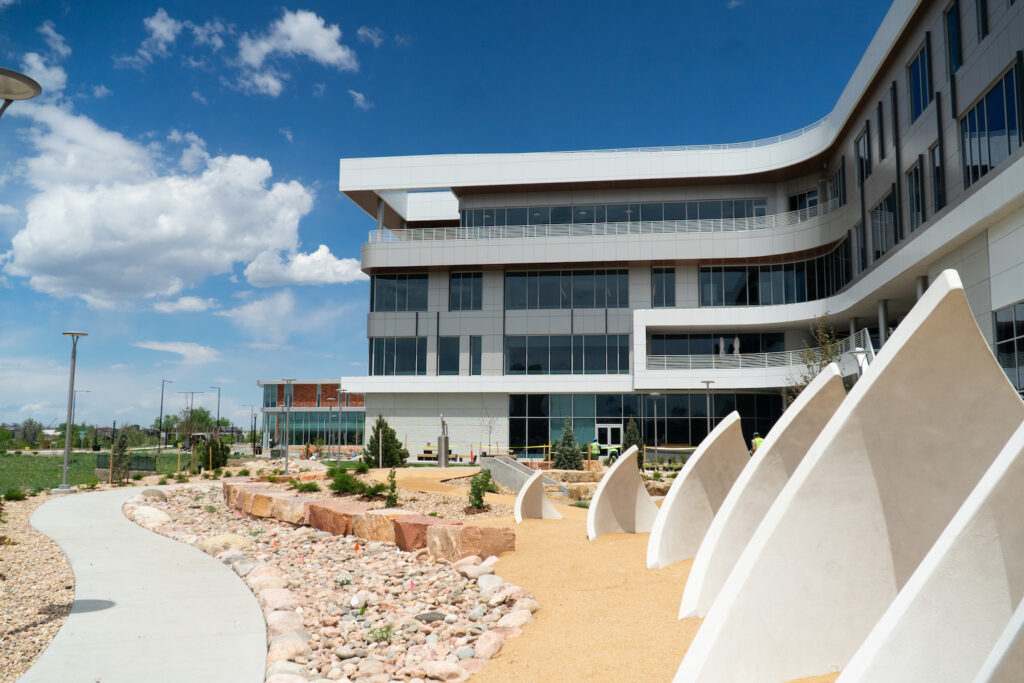
The CSU Spur Backyard functions as a living laboratory where scientists study plant health, water quality, green infrastructure, urban agriculture, and more. The outdoor space features landscape architecture representing the state’s major watersheds and allows visitors to enjoy a break in the Colorado sunshine while connecting with educational opportunities and interactive, rotating programming.
Backyard landscaping and plant selection
The Backyard was designed to reflect the four major watersheds found in Colorado: South Platte, Arkansas, Rio Grande, and Colorado River. The Continental Divide is represented with an interactive water pump to help visitors understand how water moves through the watersheds, flowing either east or west, into engineered bioswales.
Native and low-water-needs or “xeric” plants are featured in the Backyard and are well adapted to this region’s semi-arid climate. The Backyard features native or adaptive and locally available plants that can thrive in Colorado’s different geological conditions.
Bioswales
Bioswales are landscape features that collect contaminated stormwater runoff, soak it into the ground, and filter out pollution. Bioswales are designed to capture runoff coming from large areas of impervious surfaces like streets and parking lots, and they have specific design features such as layers of engineered soil and gravel, perforated pipe underdrains, and overflow structures to help handle runoff from large storms.
Like a super-sized rain garden, the Backyard bioswales use native or adaptive plants that require less water but help the ground absorb more precipitation while also preventing erosion. Engineers and landscape architects worked together to design and build the CSU Spur bioswales.
From the Backyard, visitors can also look through the glass doors into the Water TAP lab, where water treatment technologies are advanced to promote widespread adoption of more sustainable water recycling and reuse practices. For example, monitoring and sensing technologies are evaluated in the TAP to assess the performance of the Backyard’s landscaped bioswales. The Backyard allows researchers to study the flow rate and filtration capabilities of these nature-based water treatment systems.
Rainwater collection & irrigation
A metal tank in the Backyard holds water that is collected from the Hydro building rooftop then piped and treated in the Water TAP lab before being pumped into a storage vessel. This water, aka roof runoff, is used to water sections of the Backyard plants where underground monitoring equipment collects data on water quality and flow.
The roof runoff is also used directly inside the Water TAP lab to evaluate different combinations of treatment and use such as membrane filtration and biological, microbial or ultraviolet treatment.
CSU works with Denver Water to return the same amount of water collected through this mechanism to the South Platte River to make sure the river ecosystem and aquatic life is not disturbed.
Experimental test plots
In a collaborative research project jointly funded by the Mile High Flood District and City and County of Denver, CSU researchers, Sybil Sharvelle and Jennifer Bousselot, are advancing innovations in stormwater management in Spur’s Backyard which functions as a unique “living laboratory.”
Experiments occur in two specially designed test plots that mimic streetside planters commonly used in urban landscapes along the Colorado Front Range.
These experimental plots are filled with soil mixtures (media) and vegetation (plants) typically installed in streetside planters across the Denver area. The plots include built-in systems to irrigate the plants using stormwater runoff collected in vaults underneath the Backyard and sampling equipment to gather data on water quality, flow rates, plant health, and other important performance-related information.
AGRICULTURAL PLOTS
The Backyard is also home to several urban agriculture plots where CSU researchers show how urban spaces can be used for plant and food production. These plots serve as a research and demonstration site to investigate water use and sources, food production, plant-pollinator interactions, seeding, and other emergent industry questions.
HYDRO GREEN ROOF
The Hydro rooftop* houses an extensive photovoltaic system, an array of solar panels that use energy from the sun to generate electricity. Planters are located directly below the solar panels providing simultaneous power generation and plant or edible crop production. These are commonly referred to as “agrivoltaic” or “argisolar” systems.
SOUTH PLATTE RIVER ACCESS
In addition to all that the Backyard has to offer, the space parallels the South Platte River, where restoration, walking paths, and an amphitheater, are under development. It’s an easy walk down to the river from the Backyard to explore one of Colorado’s most important waterways.
UCFH RESEARCH GROVE
The Urban & Community Forestry Hub is creating an urban research grove, a living laboratory for urban sustainability and climate-resilient natural resource management. Physiologists will measure urban tree water use to identify species best suited to withstand current and future climate pressures.
*This system is not publicly accessible, but guests can stop by the green roof on Terra to visit a living rooftop garden or walk to the northwest corner of the Backyard to catch a glimpse of the solar arrays from the ground!
Crescendo
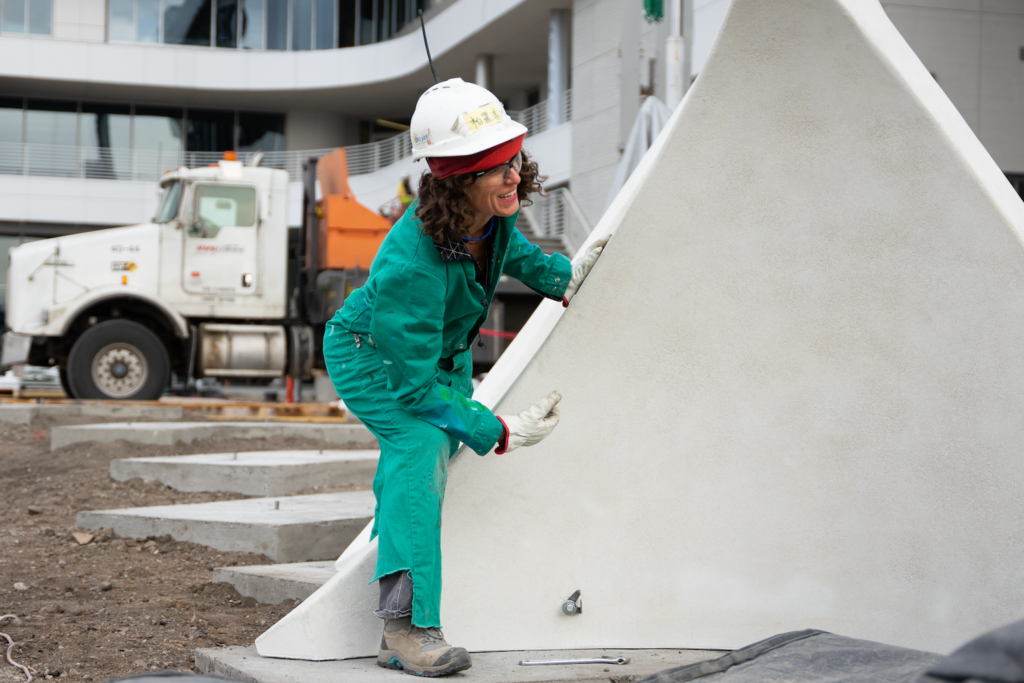
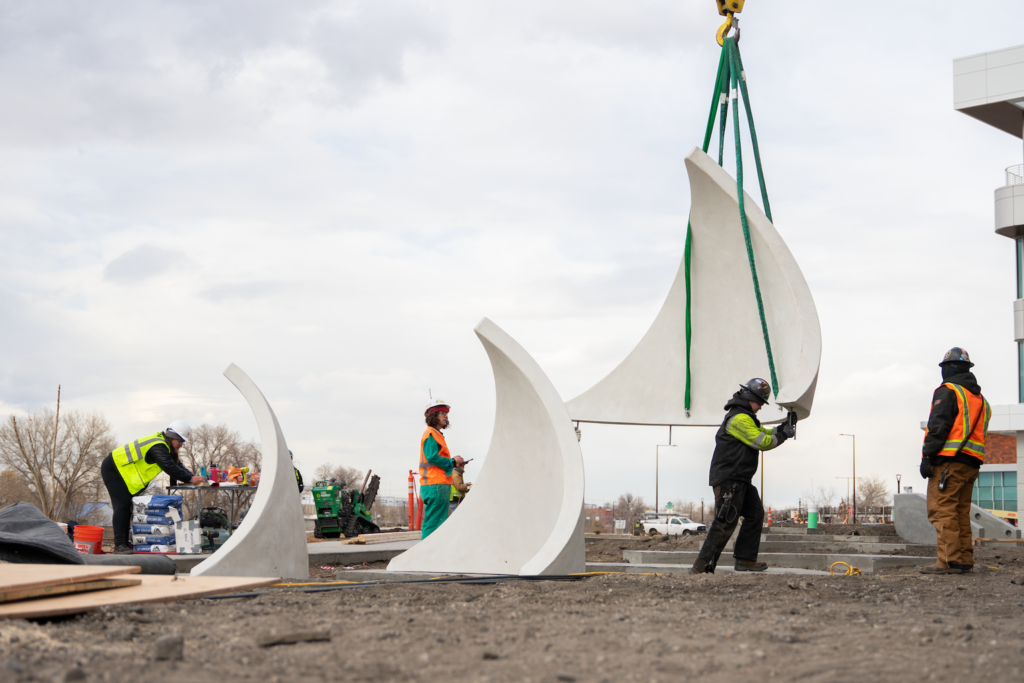
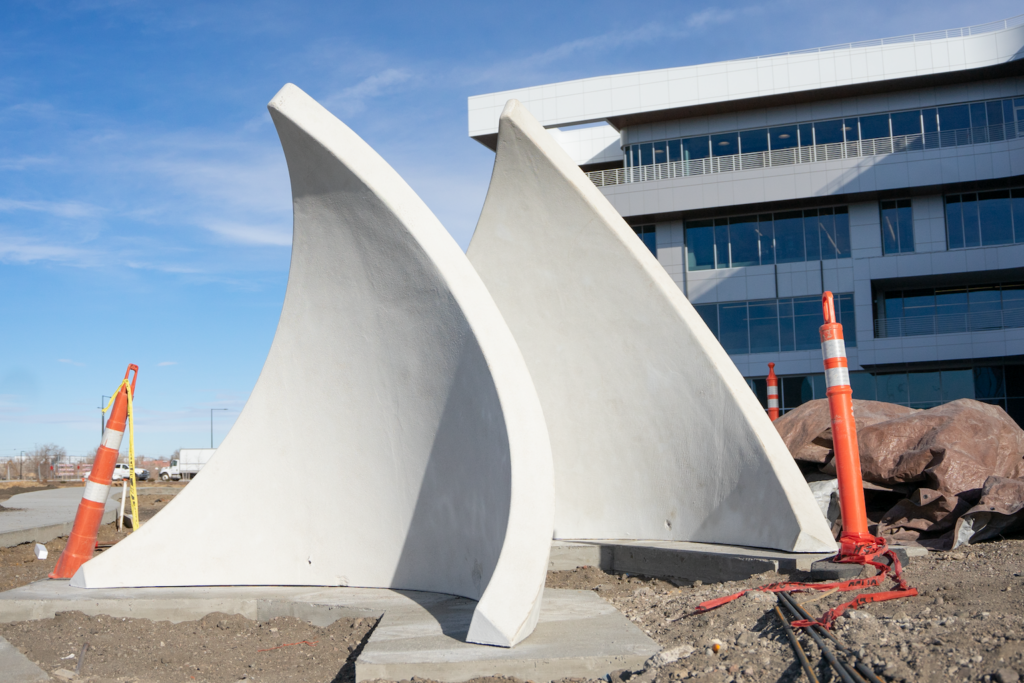
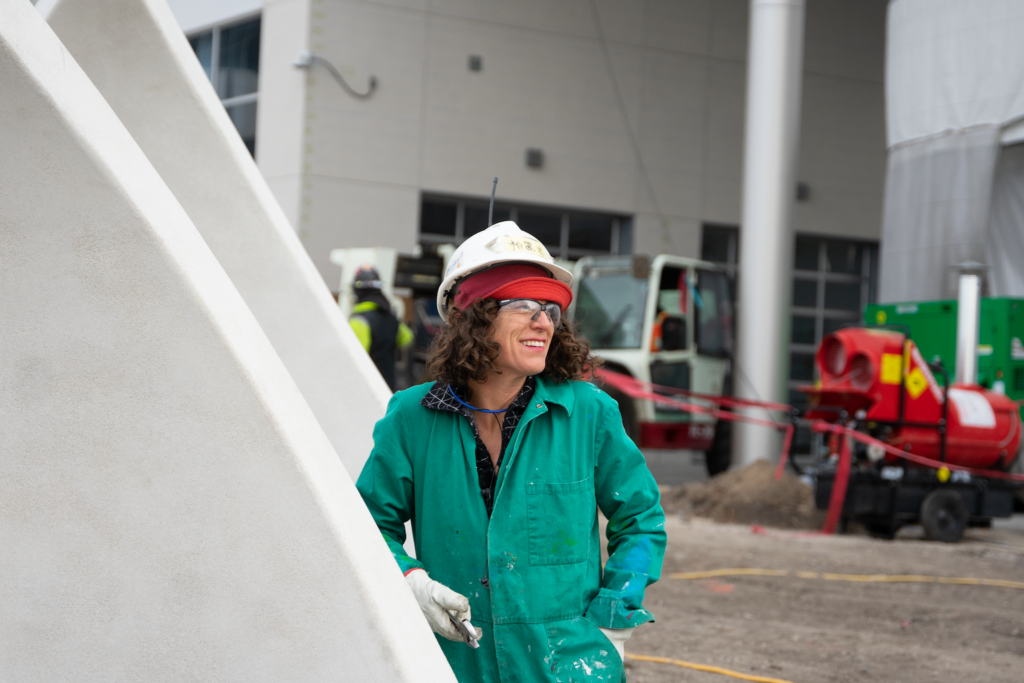
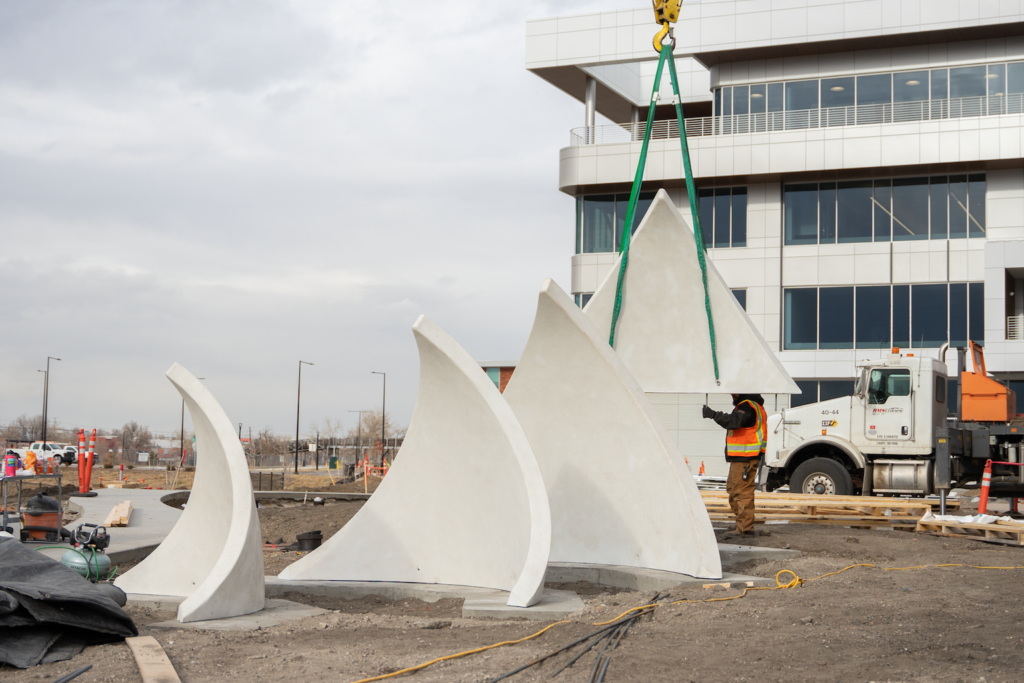
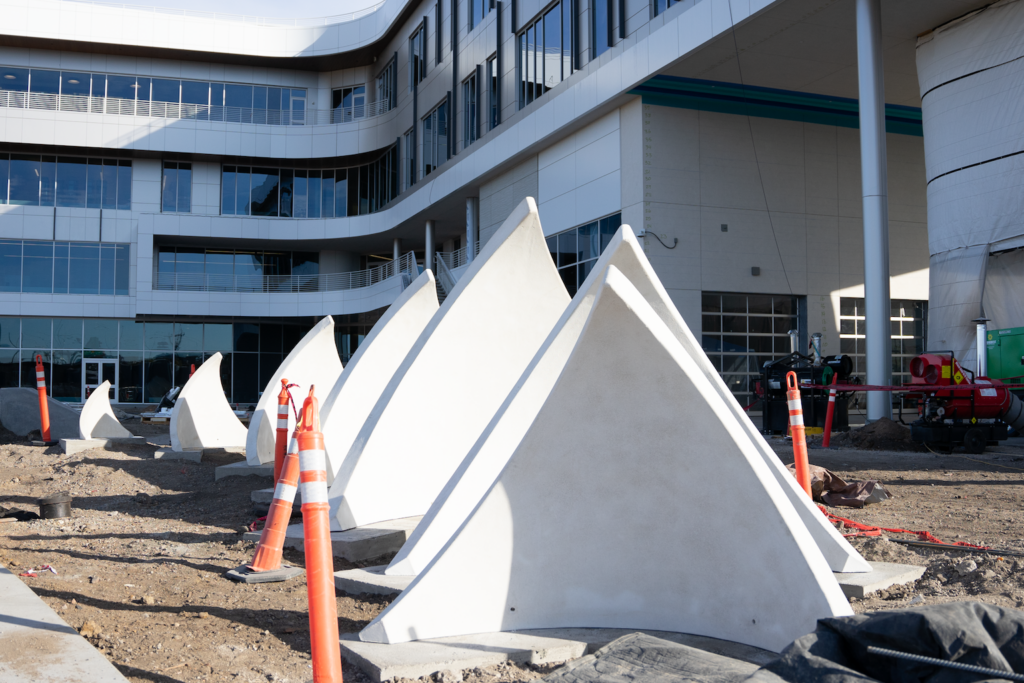
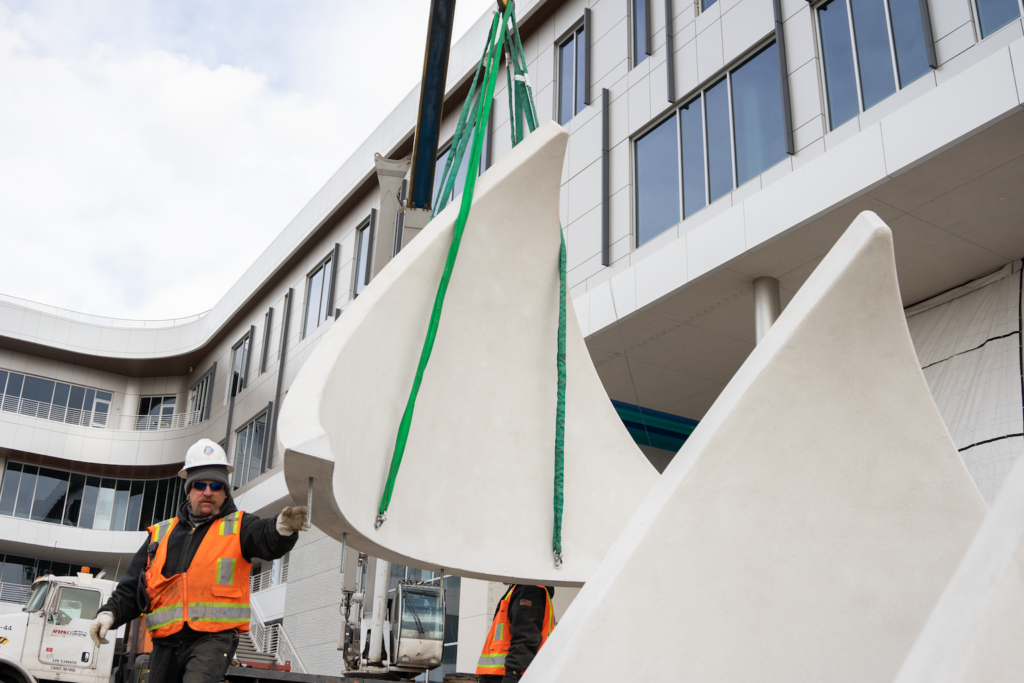
The Backyard is also home to one of CSU Spur’s eight art installations, titled Crescendo, made up of large concrete waves, designed and installed by local artist Nikki Pike.
KAREN SCHLATTER
Director, Colorado Water Center
Karen Schlatter was appointed director of the Colorado Water Center at Colorado State University in 2025, after joining the Center as associate director in 2023. Schlatter brings academic, nonprofit, and public sector experience in managing complex water challenges with a deep commitment to building partnerships and the ability to engage in conversations across Colorado’s water community. She joined CSU from the University of Florida Water Institute where her work included facilitating multi-stakeholder/academic teams to achieve shared goals around water management through collaborative, interdisciplinary research. Prior to her role at UF, she served as associate director of the Colorado River Delta Program at the Sonoran Institute, where she focused on building cross-sector and international partnerships to support large-scale ecological restoration, effective binational water management, and community engagement in the Colorado River Delta region. Schlatter earned a Bachelor of Science in biology from McGill University and a Master of Science in environmental studies from the University of Colorado Boulder. She served as an agricultural extension volunteer in the Peace Corps in Paraguay.
TOM VILSACK
Chief Executive Officer, World Food Prize Foundation
Effective March 1, 2025, Thomas J. Vilsack, former United States Secretary of Agriculture and Governor of Iowa, will become the first Chief Executive Officer for the World Food Prize Foundation. In this new role, Governor Vilsack will focus on expanding the Foundation’s global network, and will further position the Foundation as a leader in addressing global food and nutrition insecurity, continuing his lifetime of public service.
In 1998, he became the first Democrat to be elected as the Governor of Iowa in more than 30 years. During his two terms as Governor, he created an $800 million, 10-year economic development incentive program—the Iowa Values Fund. His administration worked with schools, medical providers, businesses, faith-based organizations and other entities to expand healthcare coverage to more than 90,000 previously uninsured children.
He became the 30th and 32nd United States Secretary of Agriculture, from 2008-2017 and 2021-2025, respectively. Only five people in U.S. history have served in the Cabinet longer, and during his tenures, the United States Department of Agriculture set records for U.S. agricultural exports and provided food assistance to millions of Americans. He helped expand food and nutrition access through summer feeding programs for children and additional support for fruit and vegetable purchases through the Women, Infants and Children (WIC) program. As Secretary, he worked to develop new and superior markets for small and mid-sized farms, allowing those operations to remain viable and in turn, strengthening and growing rural communities.
Governor Vilsack has long been connected to the World Food Prize Foundation, having served on both the Council of Advisors and the Board of Directors. His insights and acumen were vital in shaping our mission and initiatives. His leadership and experience will be instrumental in expanding the Foundation’s international reach and continuing the mission of elevating innovations and inspiring action to sustainably increase the quality, quantity and availability of food for all.
It’s our anniversary!
It’s our anniversary! CSU Spur has been fully open to the public, sharing hands-on, family-friendly activities around food, water, and health for two years. Join us on Saturday, Jan. 11, for 2nd Saturday activities, including desserts, a mariachi performance, face painters, horses on treadmills, veterinarians in surgery, scientists in labs, and more. The celebration is from 11 a.m.-2 p.m. and CSU Spur will be open 10 a.m.-5 p.m.; no registration required, all public activities are free.
2nd Saturday at CSU Spur is presented by Canvas Credit Union.
We’ll see you Saturday!
2nd Saturday at CSU Spur is 10 a.m.-2 p.m. this Saturday (May 9), and this month, the theme is Spur in Bloom. Join us for flower-themed arts and crafts, horse demonstrations, interactive activities focused on topics like sustainability and gardening, the return of the Market at the Center, and more!