CSU Spur’s programs inspire youth to tackle real world problems through hands-on, experiential education. At CSU Spur, we want students to see themselves as leaders in their homes, schools, and communities — and we want to broaden their exposure to careers so they realize they can be anything they want to be! CSU Spur’s rotating programs connect children to scientists, researchers, veterinary experts, and faculty through live demonstrations, hands-on experiments, and interactive experiences. Our future needs young people, and getting students interested in food, water, and health starts now!
CSU Spur is free and open to all educational groups — school groups, field trips, after-school programs, summer camps — as well as individuals and families looking for a more “self-guided” experience. We look forward to hosting your group at CSU Spur!
PLEASE NOTE:
- Reservations are required for guided experiences at CSU Spur.
- All CSU Spur education programs are FREE to school groups.
- Transportation (bus) reimbursement is available for qualifying schools.
Field trips and guided tours
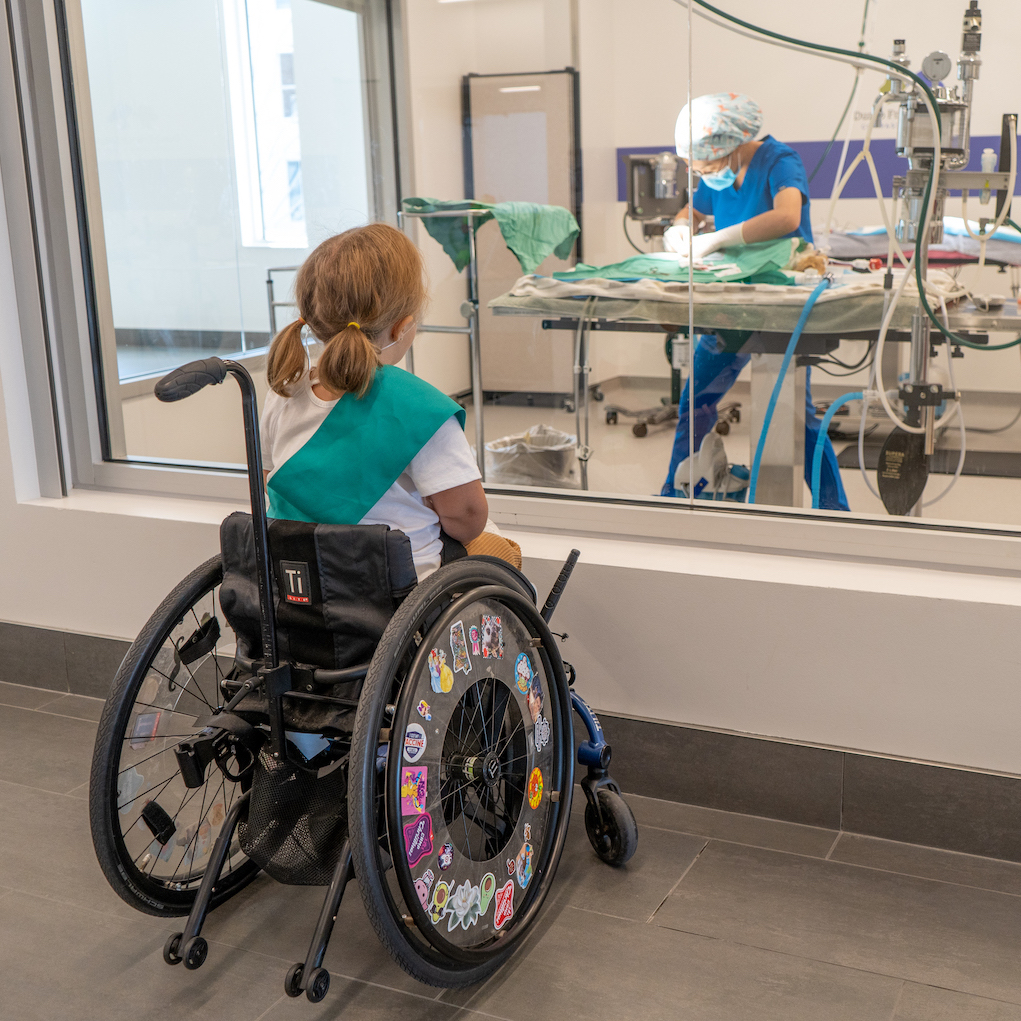
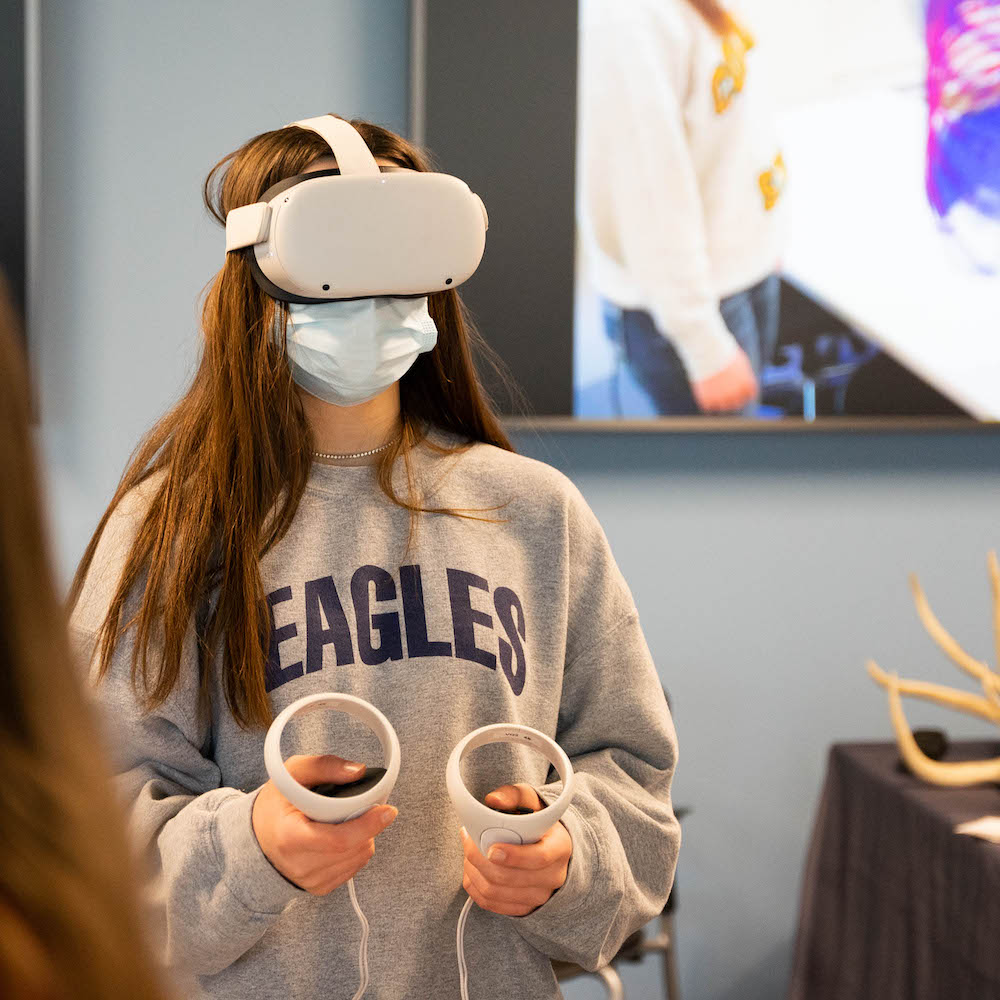
Educational programs at CSU Spur offer opportunities for students to engage with unique career pathways in the Hydro, Terra, and Vida buildings. In Vida, students may engage with veterinary staff leading animal surgeries, learn about animal anatomy in the virtual reality classroom, and view demonstrations of horses supporting human physical and mental health. In the Terra building, students may engage with agricultural specialists and food scientists and check out the Metropolitan Agricultural Research Center. In the Hydro building, students may engage with Denver Water, engineer waterways at the stream table, and explore the Water Teaching Lab.
Spring 2026 programming is full; be notified when summer and fall registrations open, or be notified of any spring cancellations.
Virtual programs
Connect with CSU Spur from your classroom! CSU Spur provides virtual programming to connect learners to scientists, researchers, and experts across Colorado, empowering learners to be anything they want to be by exploring a diverse array of careers.
*To use the virtual reality classroom, put in a request through the school programs link above.
Self-guided tours
Educators are welcome to bring a group of up to 20 students to Spur for a self-guided tour any time during open hours. If you have a larger group, we ask that you please notify our education team at [email protected]. When you arrive, check-in at one of our buildings’ front desks to get oriented. Self-guided worksheets or booklets are available upon request. Please be mindful that if you are planning a self-guided field trip without a reservation, some program areas may be closed for registered groups.
Bring CSU Spur to your school or event
The mobile outreach education lab, Sci on the Fly, delivers programming inspired by actual CSU research in partnership with CSU Spur. High-end gaming computers run advanced team-based programs focused on teaching youth across Colorado about the deep connections between humans, animals, and the environment. Digital microscopes are also available, as well as additional programming that highlights career opportunities in virology and anesthesiology.
Frequently asked questions
CSU Spur educational programs strive to connect learners to hands-on learning throughout their time on campus. Hands-on experiences will depend on the selected program; some examples are below.
- Hydro: Engage in hands-on activities at the stream table and the mock science lab, use microscopes to investigate water quality in the Hydro Teaching Lab, and explore the outdoors in the Backyard.
- Terra: Interact with a wall-sized touch screen to see CSU’s impact across the globe, whip up pretend farm-to-fork recipes in the mock kitchen, learn about controlled environment agriculture in the rooftop greenhouse, and create recipes in the Ardent Mills Teaching and Culinary Center.
- Vida: Observe live surgery at Humane Colorado, care for pets in the mock vet clinic, experience virtual reality learning, see horses support human health at the Temple Grandin Equine Center, and observe a horse receiving equine sports medicine therapy in an in-ground water treadmill.
CSU Spur hosts field trips for students from preK through college/adult. Each program is designed to accommodate different age groups and can be customized to meet your students’ needs. Some program areas, such as the virtual reality classroom, are only available for students aged 9 or older.
Yes. Our programs align with Next Generation Science Standards and select Colorado State standards. For details on how a specific program aligns with standards, please contact the School Programs Coordinator.
While Spur doesn’t have a formal dress code, we recommend comfortable, closed-toe shoes as students may be walking extensively across campus. Some activities have specific dress requirements, and you will be notified if special attire is needed. For outdoor experiences, students should wear clothing and shoes they don’t mind getting wet or dirty. For kitchen experiences, students must wear closed-toe shoes, long pants, and minimal jewelry.
The CSU Spur education team will provide storage carts for student belongings upon arrival. All belongings will be stored at the front desk by our administration team. Please encourage students to leave valuables or items that could easily be lost at school, as Spur is not responsible for misplaced items.
Yes. Students can enjoy lunch in the Hydro Backyard, which has green space, tables, and picnic seating. In case of inclement weather, indoor lunch spaces will be available for 6th-12th graders, and PreK-5th grade groups will be provided with open floor space and lunch tarps. Chaperone supervision is required throughout the lunch break. Please be mindful that Spur does not have access to microwaves for school groups.
- The minimum number of students required to book a guided field trip is 15.
- The maximum number of students allowed at one time is 120.
- The required student-to-chaperone ratio is 10:1 (students to adults).
You may have more than one chaperone per 10 students, but not fewer. For a group of 120, you should have at least 12 chaperones. Youth under the age of 16 must be chaperoned at all times. All scheduled school groups should stay with their chaperones.
CSU Spur offers field trip experiences Tuesday through Friday, February through December. We do not offer programming in the month of January due to the National Western Stock Show on-site; check out field trip options for January with the NWSS.
CSU Spur offers both morning and afternoon field trip experiences. Arrival times are as follows:
- Morning: Earliest arrival at 10 a.m.
- Afternoon: Earliest arrival at 1 p.m.
The length of the experience depends on your selected program. Programs average between 2-3.5 hours.
There is no cost for CSU Spur field trips. All field trip opportunities are free for students and chaperones.
While schools are responsible for arranging their own transportation, CSU Spur may be able to offer reimbursement for some costs. We offer up to $250 reimbursement per bus for up to two buses per school per school year (for a maximum reimbursement of $500). Reimbursement is subject to availability and is processed on a case-by-case basis. For more information, please complete the bus reimbursement form.
Our education team begins scheduling field trips for the fall term in early August and for the spring term in early December. We prioritize partner organizations first, followed by public registration. Priority is given to groups based on location, Title I eligibility, and alignment with Spur’s mission. Due to our partnership with the National Western Stock Show, we do not schedule guided programs during the month of January.
Yes. Spur requires a permission slip for students to participate in any water-based, food-based, or animal-based programs. If one or more of your students does not have a signed permission slip, they may still attend the field trip, but will not be able to participate in these program areas.
We ask for cancellations at least two weeks in advance, when possible. However, we understand that emergencies happen, and there is no penalty for last-minute cancellations. Please be aware that, in the event you must cancel, our education team will try to reschedule your group, but we cannot guarantee a new field trip date for the current school year.
Students should be dropped off in the loading zone in front of the Vida building and picked up in the loading zone in front of the Hydro building.
Buses should park in the guest parking lot, located north of the Vida building. If buses are parked incorrectly, they will be asked to relocate.
You may bring your students without a reservation, but please be aware that program areas like the stream table, virtual reality classroom, and greenhouse may not be available as scheduled groups will have priority access. If you choose to self-guide, we still require a 10:1 student-to-chaperone ratio, and we recommend keeping the group size between 15-20 students. If you are planning to self-guide with a group, please email [email protected] so we can best support your experience on-site.
If you are unable to secure a field trip reservation, CSU Spur partners with local organizations that offer in-person engagement in your classroom. More information coming soon.
Students will not be able to pet or engage with animals directly at CSU Spur. However, they can observe animals during surgical procedures at Humane Colorado or in action at the Temple Grandin Equine Center and Equine Sports Medicine and Rehabilitation Center.
CSU Spur hosts a homeschool day twice a year in the spring and fall, inviting up to 350 homeschoolers to engage in exciting activities. Dates for these events are posted on the CSU Spur website, so be sure to check for updates. We do not book field trips for homeschool groups with fewer than 15 students. Homeschool guided group experiences are available from 1-3 p.m. Tuesday through Friday.
Yes, CSU Spur is able to provide Spanish-English language support upon request. Please request language support when registering for your field trip by noting it in the registration form. For other language interpretation, please consider bringing your own language support. For additional questions, please email [email protected].
Questions? For more information, please email [email protected]. We look forward to receiving your questions and inquiries, and we will strive to respond within three business days.
CHRIS SHAFFNER
Senior Vice President, Utilities, Supply Chain, and Trade, CoBank
Christopher Shaffner is the senior vice president for the utilities, supply chain and global trade finance divisions, and is a member of the enterprise leadership team of CoBank, a cooperative bank serving agribusinesses and rural infrastructure providers throughout the United States. Prior to CoBank, Christopher held various leadership positions in both public and private organizations, including executive leadership positions in public housing authorities in Colorado and in New York where he served as the Manhattan Borough Director, leading operations for the New York City Housing Authority during Mayor Michael Bloomberg’s administration. A graduate of the University of Michigan Ross School of Business, Christopher is also a Finance Leaders Fellow at the Aspen Institute.
JAMES HENDERSON
Vice President, Colorado Farm Bureau
James Henderson is a 5th generation farmer and rancher. The ranch, located in Colorado’s San Luis Valley, has been in continuous family operation for over 140 years. They raise cattle, oats, barley and other forage crops including alfalfa for use in the dairy industry. Henderson has served as the Vice President of Colorado Farm Bureau since 2020 and also serves on several water boards in his community. He is a graduate of the College of Natural Resources at Colorado State University. James and his wife Kiley have 6 children.
EMMA TROLLER
Project Development Manager, Blue Forest
Emma Troller is a Project Development Manager at Blue Forest, a non-profit conservation finance organization. Coming from a background in environmental planning, community engagement, and land conservation, at Blue Forest she is responsible for developing public-private partnerships and conservation finance mechanisms across landownership types to improve ecological resilience and reduce wildfire risk throughout the American West.
In Colorado, she previously spent three years at Palmer Land Conservancy. As the Conservation and Recreation Program Manager, Emma managed conservation easement transactions and built trust with rural landowners to negotiate public access for recreation projects. She currently serves on the board of Rocky Mountain Women’s Film, and previously held board positions at the Pikes Peak Outdoor Recreation Alliance and the Gold Belt Tour Scenic and Historic Byway. Emma holds a Bachelors of Urban and Environmental Planning from the University of Virginia and a Graduate Certificate in Natural Resource Management & Sustainable Ecosystems.
PETER CULP
Managing Partner, Culp & Kelly, LLP
Based in Phoenix, Arizona, Peter is a nationally-recognized Western water law and policy attorney, with nearly 25 years of experience representing and partnering with foundations and NGOs, municipalities, industry, tribal governments, agricultural interests, and investors, including extensive work in the Colorado River Basin. Over the past decade, Peter has also worked extensively on the development and deployment of innovative approaches to conservation finance, and has worked with various partners to create water-related impact investments throughout the Western United States and northern Mexico.
Peter is the managing partner and co-founder of Culp & Kelly, LLP, a mission-driven law and policy firm, as well as its affiliated consulting and project incubation firm, CK Blueshift, LLC. The two firms work as an integrated team to address a range of water, natural resource, and climate resilience challenges, and together support a growing set of innovative enterprises, projects, and restoration efforts throughout the Western United States.
KATHLEEN GALVIN
University Distinguished Professor, College of Liberal Arts, Colorado State University
Dr. Kathleen Galvin is a University Distinguished Professor in the Department of Anthropology and Geography and former Director of the Africa Center at Colorado State University. She is also an Advising Faculty member for the Graduate Degree Program in Ecology, where she founded the Human-Environment Interactions specialization for graduate students interested in a robust academic background in social-ecological systems.
She has conducted interdisciplinary social-ecological systems research in the drylands of East Africa and East Asia. Galvin has worked with local communities on land-use change, biodiversity conservation, food security, and climate change impacts and adaptation. She uses social-ecological systems frameworks, simulation modeling, and geospatial tools to understand human-environment issues and interactions. Her current research examines local perceptions of climate change and environmental issues, and explores actions to achieve viable solutions in Kenya. Another project focuses on understanding the trade-offs of community-based conservation for people and the environment throughout Africa. She has just completed a NASA grant to understand household decisions, ecosystem change, and atmospheric water recycling in Kenya through modeling for water futures.
She has taken on transdisciplinary science, linking science with society to ensure that her work’s impact goes well beyond the academy. As a lead author of the Intergovernmental Science-Policy Platform on Biodiversity and Ecosystem Services (IPBES, 2019), she was instrumental in linking the science of biodiversity and ecosystem services with diverse governance and knowledge systems worldwide.
She is a Fellow in the Society of Applied Anthropology, a past Fellow in the Aldo Leopold Leadership Program, and a contributor to the Intergovernmental Panel on Climate Change that was awarded the Nobel Peace Prize in 2007. In 2012, she received the National Sustainability Science award from the Ecological Society of America for her team’s efforts to use their scholarship to collaborate with pastoral communities and policymakers in eastern Africa. In 2017, the College of Liberal Arts awarded her the John N. Stern Distinguished Professor Award, recognizing a career of outstanding research, teaching, and service achievement.
CHRISTINA SOHN
Senior Associate, Superbloom
Christina has over 9 years of professional experience in bringing landscape projects to life on varied sites: from well-loved public parks, art and science museums, university courtyards, to many-acre, ecologically-sensitive residences. While seeing projects through from concept to construction, Christina places a high priority on the relationship with the client, on meeting project milestones, and on attention to detail. She admires the rugged hardiness of Colorado’s native plants: their ability to thrive in harsh conditions, to sustain wildlife, to embody resilient beauty. When they are authentic to the place, elegant and logical, she believes that the right plants and good design have the ability to lift our spirits. She believes in bringing this beauty to the neglected, in practicing restraint and clarity in design, and in welcoming the rambunctiousness of life, whether in plant or human form.
BORIS NIKOLAEV
Associate Professor and Tracy Family Faculty Fellow, College of Business, Colorado State University
Boris Nikolaev is an Associate Professor and the Tracy Family Faculty Fellow at the College of Business at Colorado State University. He studies entrepreneurship, well-being, and how emerging technologies are affecting the future of work.
He is also an Editor at Entrepreneurship Theory and Practice, Foundations and Trends in Entrepreneurship, and an instructor for Statistical Horizons.
His research includes over 50 peer-reviewed publications, including a dozen articles in premier journals such as JBV, ETP, JAP, SEJ, and JIBS. His work has been featured in the Economist, Forbes, TechCrunch, the Atlantic, and many other media outlets. He has been honored to receive multiple research excellence awards, including the Habicht Early Career Research Award and Business for Better World Research Award.
In the classroom, his passion for innovative teaching has earned recognition from the Academy of Management. He has also received several university-wide teaching awards, including the William H. Fox Teaching Award for Emerging Excellence (Emory University), the N. Preston Davis Award for Instructional Innovation (Colorado State University), the Provost Award for Outstanding Teaching (University of South Florida), and the Innovation in Entrepreneurship Pedagogy Award (AOM ENT Division).
What drives him? A curiosity about how entrepreneurship shapes our world and a commitment to nurturing the next generation of business leaders and entrepreneurship scholars. Whether he’s exploring the impact of AI on value creation or investigating the well-being of entrepreneurs, his goal is to produce research that matters and education that inspires.
ELIZABETH BABCOCK
Executive Director, Denver’s Office of Climate Action, Sustainability and Resiliency
Elizabeth Babcock is the Executive Director for Denver’s Office of Climate Action, Sustainability and Resiliency. She has over 20 years of experience managing collaborative and transformational projects. During her 12 years with the City and County of Denver, Elizabeth acted as a leader in the development of Denver’s climate office and created nationally recognized programs under Denver’s Climate Protection Fund. She has managed several multimillion-dollar grants, including the Denver Energy Challenge, funded by the U.S. Department of Energy. She also led Denver’s participation in the American Cities Climate Challenge, driving climate action across city government. In previous roles, she worked with universities around the world to advance sustainability and civic engagement through the Talloires Network and community engagement through the Civic Knowledge Project at the University of Chicago. She holds a BA with highest honors from the University of Florida and an MA from the University of Chicago.
ALEX BUDAK
Professional Faculty, University of California Berkeley
Alex Budak is an educator, entrepreneur, speaker, and author who helps people cultivate courage and turn everyday moments into change. A UC Berkeley faculty member, he holds a triple appointment at the Haas School of Business, School of Public Health, and College of Natural Resources, where his courses teach students and executives to lead with character, connection, and contribution—and have even inspired student tattoos.
His book, Becoming a Changemaker, is being translated into 27 languages. CNBC named it a top-five nonfiction book about work and Inc. named him a top 50 leadership and management expert.
Budak’s change journey began when he co-founded StartSomeGood, which has raised more than $12 million to launch and scale new initiatives in more than 50 countries.
A UCLA and Georgetown graduate, he delivers keynotes on leadership, change, and courage to audiences worldwide, from Ukraine to Cambodia, and regularly leads interactive sessions for organizations such as Accenture, Salesforce, the World Bank, and UNHCR.
Formerly a travel writer, Alex now enjoys the everyday adventures of life with his two young kids—his favorite changemakers. A lifelong Chicago Cubs fan, he brings the same loyalty to his work, though he admits one lesson came the hard way: never go budget skydiving.
KAREN SCHLATTER
Director, Colorado Water Center
Karen Schlatter was appointed director of the Colorado Water Center at Colorado State University in 2025, after joining the Center as associate director in 2023. Schlatter brings academic, nonprofit, and public sector experience in managing complex water challenges with a deep commitment to building partnerships and the ability to engage in conversations across Colorado’s water community. She joined CSU from the University of Florida Water Institute where her work included facilitating multi-stakeholder/academic teams to achieve shared goals around water management through collaborative, interdisciplinary research. Prior to her role at UF, she served as associate director of the Colorado River Delta Program at the Sonoran Institute, where she focused on building cross-sector and international partnerships to support large-scale ecological restoration, effective binational water management, and community engagement in the Colorado River Delta region. Schlatter earned a Bachelor of Science in biology from McGill University and a Master of Science in environmental studies from the University of Colorado Boulder. She served as an agricultural extension volunteer in the Peace Corps in Paraguay.
LINDSAY ROGERS
Policy Manager for Municipal Conservation, Western Resource Advocates
Lindsay Rogers is the Policy Manager for Municipal Conservation at Western Resource Advocates. Rogers advances water conservation at the municipal level to bolster communities’ water security and reduce pressure on Western rivers and streams. As climate change and population growth further strain Western waterways, she works closely with municipalities, water utilities, partners, and decision makers to improve water efficiency, boost local resilience, and protect rivers. By facilitating local and state-level policy development and providing direct project support, Lindsay helps communities and utilities pursue innovative and tailored water-saving strategies such as graywater ordinances, waterwise landscaping policies, and better integrated water and land-use planning. Previously, she spent five years as the Colorado Basin Program Manager at WaterNow Alliance, focused on advancing sustainable water policies and programs in the West by working directly with municipal water decision makers. Lindsay serves on the board of Colorado WaterWise. She holds a B.S. in Environmental Studies and International Relations from Tufts University and is pursuing an MPA from CU Denver.
JARED ROMERO
Program Officer in the Environment Program, Walton Family Foundation
Jared Romero, Ph.D., is a Program Officer in the Environment Program at the Walton Family Foundation, where he works to advance conservation solutions in the Colorado River Basin. His career bridges science, education, and conservation leadership, shaped by a lifelong connection to the outdoors and a belief in the power of education to transform lives.
Jared previously served as Director of Strategic Partnerships at the Theodore Roosevelt Conservation Partnership, where he built coalitions to expand equity in outdoor recreation and conservation policy. Earlier in his career, he held academic and research leadership roles at Boise State University and Adams State University, spearheading the development of One Health programs connecting human, animal, and environmental health.
He has been recognized as a Colorado Water Hero, served on boards for national and regional conservation organizations, and is known for creating inclusive spaces that elevate underrepresented voices in conservation. Jared holds a Ph.D. in Biomedical Sciences from Colorado State University, as well as graduate and undergraduate degrees in natural and biological sciences.
Grounded in humility and service, Jared sees the outdoors as both refuge and responsibility. The outdoors are a place that inspires his work to ensure future generations have access to healthy lands and waters.
JULIE DAVIES O’SHEA
Executive Director, Farmers Conservation Alliance
Julie Davies O’Shea has guided FCA through two decades of growth, positioning the organization as a national leader in irrigation modernization. As a founder and executive director of Farmers Conservation Alliance, Julie’s expertise begins with her ability to foster relationships with key partners in irrigation across the West. Under her leadership, FCA has partnered with 55 irrigation communities to implement projects that improve agricultural efficiency, increase water reliability, and deliver lasting environmental and community benefits.
GIGI KARMOUS-EDWARDS
CEO, Karmous Edwards Consulting
Over the course of more than 25 years, Gigi Karmous-Edwards has worked in various domains of digital technologies, spanning the Data Communications industry, Academia, and most recently, dedicating the last 13 years to the Water Sector. Gigi is the technical lead and Co-PI of a GenAI WRF #5321 (GenAI for the Global Water Sector) project. Gigi is the founder and former chair of the SWAN Digital Twin H2O Work Group, leads AI market insights at BlueTech Research as a Technology Advisor Group (TAG) member, and serves on the Advisory Boards of Veralto and Qatium.
Gigi has authored over 40 publications and frequently speaks at global conferences. As the CEO of Karmous-Edwards Consulting, she advises global utilities and technology companies on digital transformation and GenAI. B.S. in Chemical Eng and M.S. Electrical Eng.
MARA WALLER
Senior Research Scholar, College of Business, Colorado State University
Mary (“Mara”) J. Waller, Ph.D., is a leading authority on team dynamics and crisis management. A professor of organizational behavior, her work focuses on how teams adapt, coordinate, and make decisions under conditions of uncertainty and high risk. Over the course of her career, Dr. Waller has authored numerous articles and books that bridge rigorous research with real-world application. Her latest book, Crisis-Ready Teams, provides evidence-based strategies for preparing teams to navigate disruption and perform effectively under pressure.
Dr. Waller is a sought-after speaker and consultant who has worked with organizations across industries, helping leaders strengthen team resilience and improve performance in turbulent environments. Her expertise has been featured in academic, business, and media outlets worldwide. With a reputation for making complex research both engaging and actionable, she brings practical insights to audiences ranging from executives and policymakers to educators and students.
TOM VILSACK
Chief Executive Officer, World Food Prize Foundation
Effective March 1, 2025, Thomas J. Vilsack, former United States Secretary of Agriculture and Governor of Iowa, will become the first Chief Executive Officer for the World Food Prize Foundation. In this new role, Governor Vilsack will focus on expanding the Foundation’s global network, and will further position the Foundation as a leader in addressing global food and nutrition insecurity, continuing his lifetime of public service.
In 1998, he became the first Democrat to be elected as the Governor of Iowa in more than 30 years. During his two terms as Governor, he created an $800 million, 10-year economic development incentive program—the Iowa Values Fund. His administration worked with schools, medical providers, businesses, faith-based organizations and other entities to expand healthcare coverage to more than 90,000 previously uninsured children.
He became the 30th and 32nd United States Secretary of Agriculture, from 2008-2017 and 2021-2025, respectively. Only five people in U.S. history have served in the Cabinet longer, and during his tenures, the United States Department of Agriculture set records for U.S. agricultural exports and provided food assistance to millions of Americans. He helped expand food and nutrition access through summer feeding programs for children and additional support for fruit and vegetable purchases through the Women, Infants and Children (WIC) program. As Secretary, he worked to develop new and superior markets for small and mid-sized farms, allowing those operations to remain viable and in turn, strengthening and growing rural communities.
Governor Vilsack has long been connected to the World Food Prize Foundation, having served on both the Council of Advisors and the Board of Directors. His insights and acumen were vital in shaping our mission and initiatives. His leadership and experience will be instrumental in expanding the Foundation’s international reach and continuing the mission of elevating innovations and inspiring action to sustainably increase the quality, quantity and availability of food for all.
KATE WATKINS
Colorado State Demographer
Kate Watkins is Colorado’s State Demographer. She leads the State Demography Office within the Department of Local Affairs. The State Demography Office produces population and economic estimates and forecasts for use by the business community, nonprofits, and state and local governments. Kate has nearly two decades of experience analyzing economic and demographic trends in Colorado and beyond. Her career history includes serving as the Chief Economist for Colorado’s state legislature, as an economist at the Denver Branch of the Federal Reserve Bank of Kansas City, and as a private sector consultant. Kate holds a Ph.D. from Cornell University.
TONY FRANK
Chancellor, CSU System
Dr. Tony Frank is the Chancellor of the CSU System. He previously served for 11 years as the 14th president of CSU in Fort Collins. Dr. Frank earned his undergraduate degree in biology from Wartburg College, followed by a Doctor of Veterinary Medicine degree from the University of Illinois, and a Ph.D. and residencies in pathology and toxicology at Purdue. Prior to his appointment as CSU’s president in 2008, he served as the University’s provost and executive vice president, vice president for research, chairman of the Pathology Department, and Associate Dean for Research in the College of Veterinary Medicine and Biomedical Sciences. He was appointed to a dual role as Chancellor in 2015 and became full-time System chancellor in July 2019.
Dr. Frank serves on a number of state and national boards, has authored and co-authored numerous scientific publications, and has been honored with state and national awards for his leadership in higher education.
Dr. Frank and his wife, Dr. Patti Helper, have three daughters.
It’s our anniversary!
It’s our anniversary! CSU Spur has been fully open to the public, sharing hands-on, family-friendly activities around food, water, and health for two years. Join us on Saturday, Jan. 11, for 2nd Saturday activities, including desserts, a mariachi performance, face painters, horses on treadmills, veterinarians in surgery, scientists in labs, and more. The celebration is from 11 a.m.-2 p.m. and CSU Spur will be open 10 a.m.-5 p.m.; no registration required, all public activities are free.
2nd Saturday at CSU Spur is presented by Canvas Credit Union.
We’ll see you Saturday!
2nd Saturday at CSU Spur is 10 a.m.-2 p.m. this Saturday (Dec. 13), and this month is a winter festival. Celebrate the season with a holiday market featuring local vendors and unique gifts, warm treats, winter crafts, and a joyful community atmosphere.