Location: Terra plaza
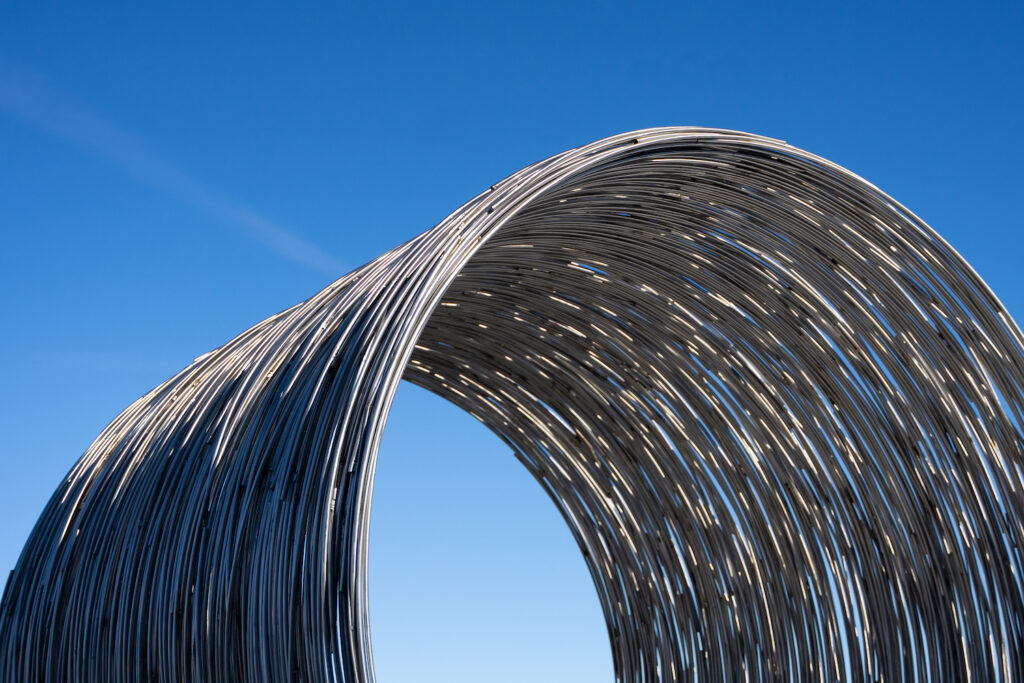
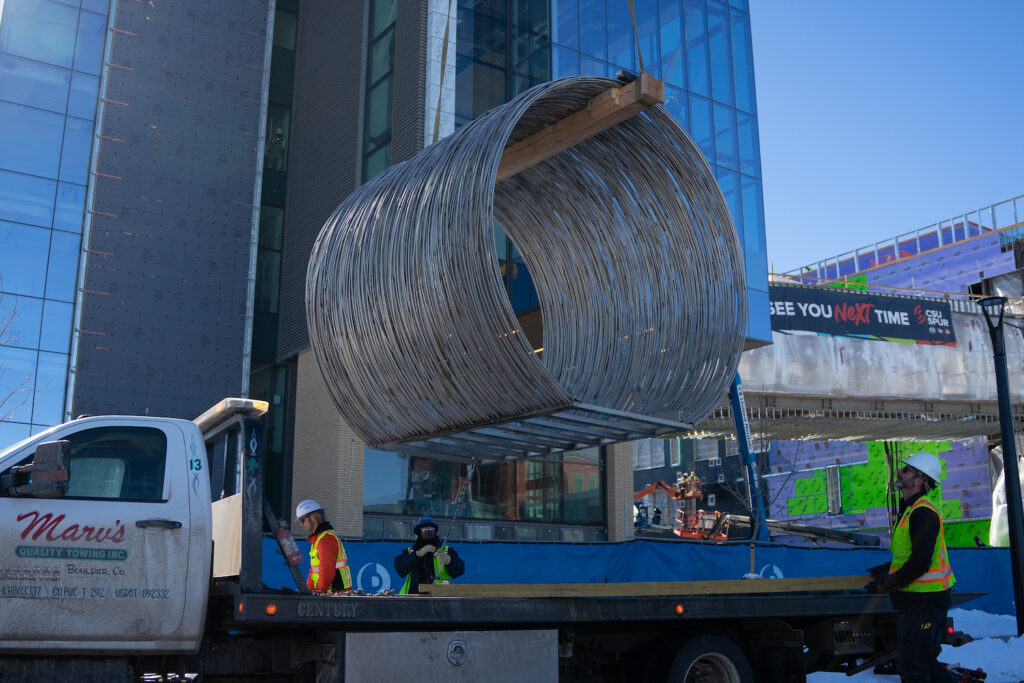
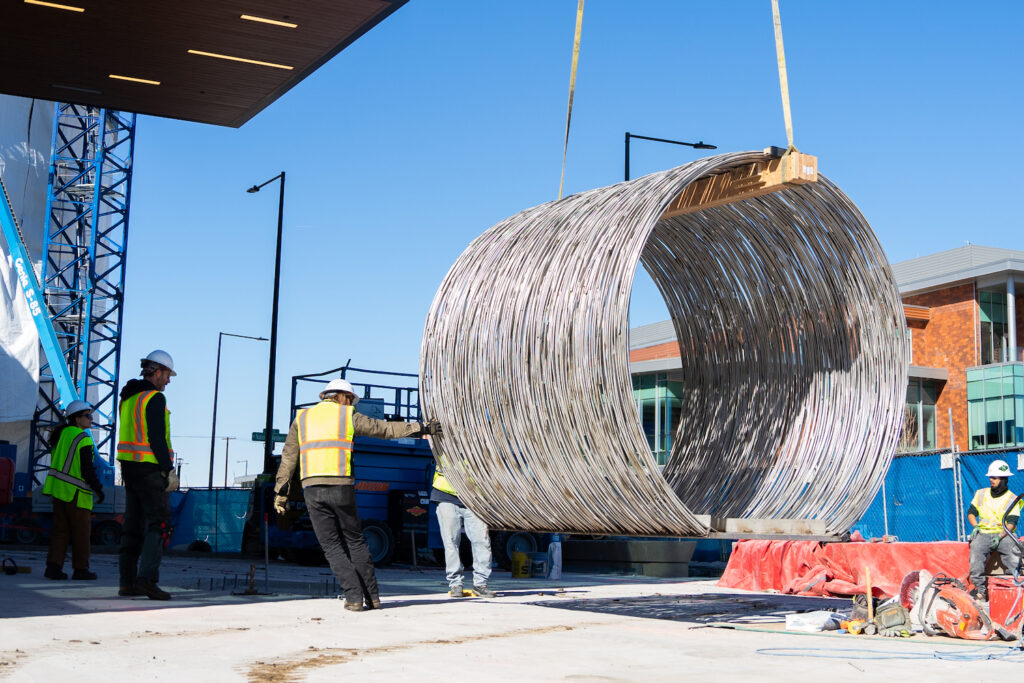
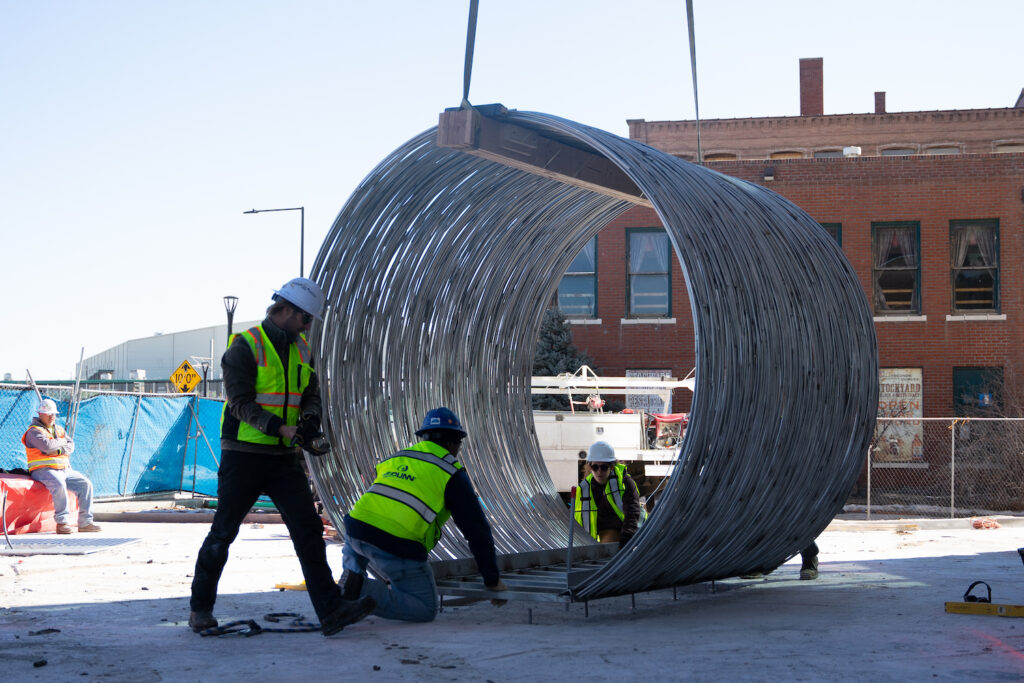
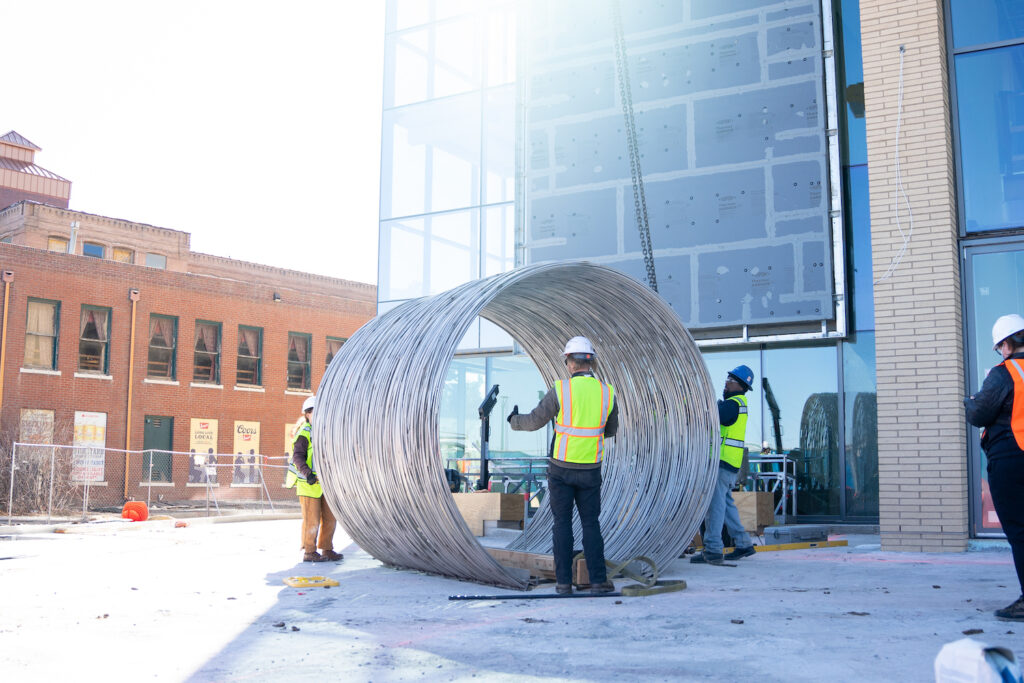
The Bale references the context of the Terra building, while interpreting the literal bale for a reflective sculptural passage. It will provide a recognizable and welcoming feature that reflects surrounding light and shadow conditions.
About the artist
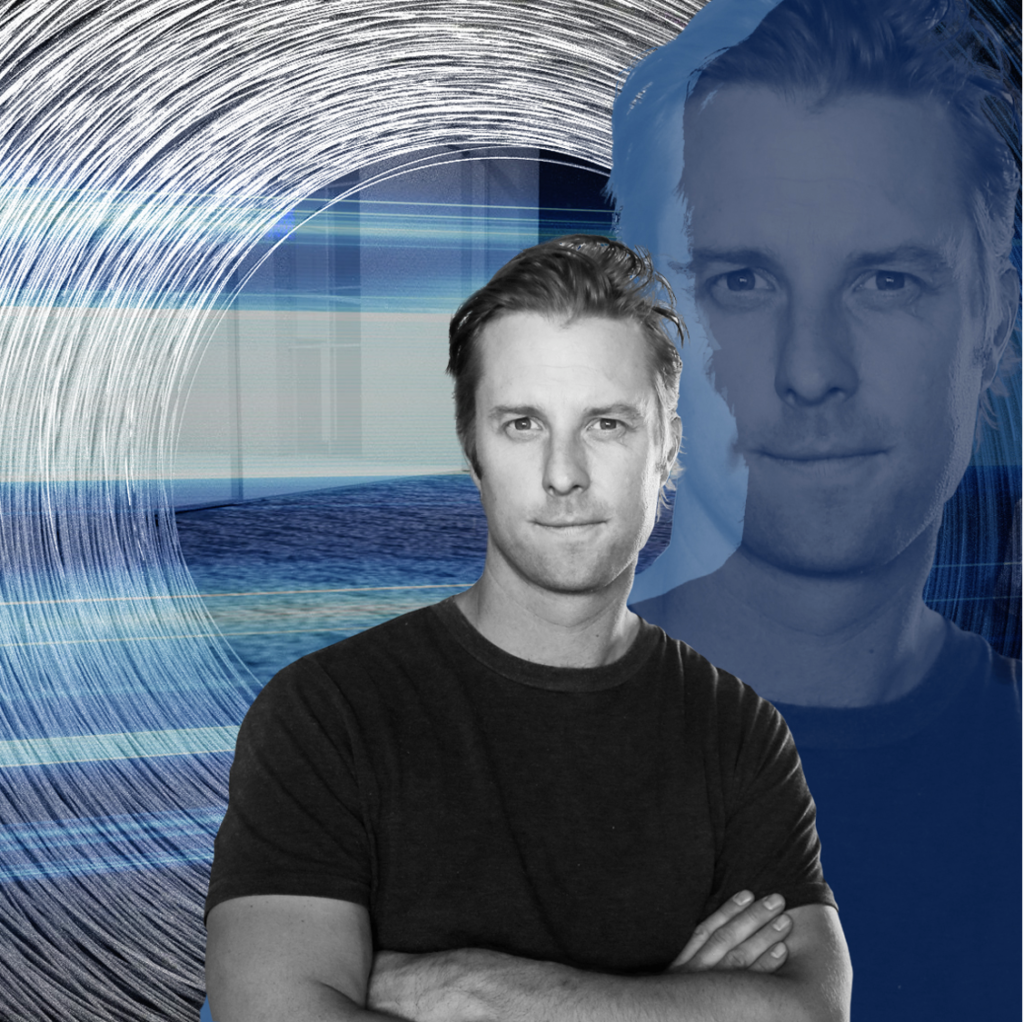
Patrick Marold has been working to bind the physical environment with our perceived orientation for over two decades. Since earning a BFA from Rhode Island School of Design in 1997, his artistic development has maintained an intimate connection to landscape, extending the environmental traditions unique to post-minimalism.
Refinement of his practice has been pursued in various locations in America and abroad, including opportunities like that of his early Fulbright Fellowship in Iceland where he began to more fully direct his energies to creating works which utilize spatial dynamics to generate an enhanced perception of light and movement.
Exhibiting widely in galleries and museums, he has earned multiple awards and recognition for his studio works as well as his publicly sited projects. In 2007, Marold received international attention for The Windmill Project, a temporary landscape installation in Vail, Colo., which seeded a local valley with a mass of light-generating turbines committed to capturing and visualizing the choreography of the wind through a unique landscape.
In the last decade he has completed numerous public commissions including the 7-acre installation, Shadow Array, at Denver’s International Airport; as well as the sky and sound work, Solar Drones, located in Canada’s National Music Centre. Diversity in setting, scale, and technical realization have equipped him with the skill and interest to apply his vision across a broad range of sites while preserving a unity of vision.
Marold maintains a studio in Colorado, and continues working toward a means of spatial intercession, inviting the viewer to consider specific conditions of landscape and materials, and their impact on our personal and communal perception.